
Artists’ and creatives’ ADHD apparel is everyday clothing that pairs neurodivergent self-expression with personal comfort, with the aim of building a wardrobe you actually want to create in. This 2026 guide to ADHD apparel for artists and creatives puts movement, sensory comfort, and bold graphics first—whether you’re drawing at a desk, making in a studio, or showing your work.
- Adhdthreadz ADHD apparel suits artists and creatives who want graphic clothing centered on neurodivergent identity.
- Choose ADHD apparel for artists and creatives by neckline, movement, fabric feel, and the message you want to wear.
- Sensory-friendly clothing is personal: check construction instead of assuming every ADHD graphic tee feels the same.
- Keep messy studio work and exhibition outfits separate when protecting a favorite graphic matters.
Why ADHD apparel matters for artists and creatives
Your creative wardrobe has a job beyond looking good. It needs to work while you reach across a canvas, sit over a sketchbook, carry materials, or stand beside your work at an opening. A shirt that needs constant adjusting is a bad match for that task, regardless of the graphic.
Adhdthreadz ADHD apparel is best for artists and creatives who want neurodivergent identity expressed through everyday graphic clothing. Start with Adhdthreadz when that message belongs in your wardrobe; start with clothes you already own when you’re still figuring out your preferred fit.
Identity and comfort are separate buying decisions. You can love a statement and dislike its neckline, or enjoy a plain shirt without wanting a slogan. Neither choice makes your creative identity less real.
For your 2026 wardrobe, use the actual workday as the brief. Drawing, printmaking, digital design, photography, and selling at a market involve different movements and different chances of getting clothing dirty. Choose for your practice, not an imagined version of a creative person.
Build a wardrobe around how you create
Start with your favorite everyday shirt
The free starting point is already in your closet. Pick the shirt you reach for without negotiating with yourself, then identify what makes it work: the neck opening, sleeve shape, length, texture, or room around your shoulders.
Be specific. Comfortable is a verdict, not a useful shopping filter. A neckline that stays away from your throat and a hem that stays put when you reach are details you can compare against another garment.
Try the shirt during your normal creative movements before buying anything new. Sit at your usual desk, reach across your work surface, and lift your arms as you would when hanging a piece. Your favorite shirt is the reference; a product photo is not.
- Note where the neckline sits when you lean forward.
- Check whether sleeves pull when you reach.
- Identify any seams or labels you notice against your skin.
- Record whether you prefer a tucked or untucked hem.
- Separate a fit problem from a fabric-feel problem.
Match your outfit to the creative task
Use your existing clothes to build distinct outfits for making, meeting, and showing. You don’t need a different identity for each setting; you need clothing that matches what you’ll do there.
For paint, ink, or clay work, choose garments you’re comfortable marking. For a desk-based illustration session, test the seated fit. For a market stall or exhibition, choose the statement you’re happy to wear while talking about your work.
Studio clothing is not protective equipment. Follow the workshop’s clothing rules around machinery, chemicals, heat, or other hazards; a fashion tee does not replace required protection. Keep dangling layers and accessories out of any setup where they conflict with those rules.
- Keep a dedicated outfit for messy materials.
- Test desk clothing while seated, not just standing.
- Check cuffs and hems against workshop requirements.
- Choose an exhibition outfit you can stand and move in.
- Put required protective clothing ahead of styling.
Check fabric and construction before the graphic
Compare the inside of a shirt you own with its product description counterpart. Neck binding, labels, sleeve seams, and the reverse side of a print all deserve attention. A design about ADHD does not automatically establish how a garment feels.
Adhdthreadz has product-specific details that help narrow the search. The ADHD What it's Like - Unisex Seamless Cotton T-Shirt is described as lightweight 200 GSM cotton with a drop-shoulder cut. What It's Like Fleece Hoodie – ADHD Streetwear | ADHDThreadz is described as 350gsm thick fleece. Those figures describe fabric weight per area, not a guaranteed comfort score.
For a 2026 purchase, treat sensory comfort as a personal fit requirement. A thicker layer and a lighter tee serve different outfit roles, but neither number tells you whether you’ll enjoy the neckline or print surface.
- Read the material details for the exact garment.
- Look for explicit construction information rather than assumptions.
- Check whether the description names a regular, loose, or slim fit.
- Inspect available photos for neckline and sleeve shape.
- Read the care instructions before assigning studio duty.
Choose a message you actually want to wear
Before shopping, look at your existing graphic shirts. Which ones still feel like you, and which ones stay folded because the joke or statement no longer lands? That gives you a better brief than choosing whichever slogan looks loudest.
A neurodivergent graphic can be proud, playful, blunt, or understated. You don’t owe anyone a cheerful explanation of your identity, and you don’t have to wear a joke you dislike to belong. Choose the message for yourself, not for an audience’s reaction.
For artists and creatives, also consider how the graphic sits beside your own work. At an opening, you might want a statement tee to be part of the outfit—or prefer a quieter top so the conversation starts with your art. Both choices work.
- Read the full wording before choosing a design.
- Decide whether you want an explicit identity statement.
- Check how much of the graphic a layer will cover.
- Choose humor only when it feels like your humor.
- Keep public-facing and private-workday preferences separate.
Test the silhouette through real movement
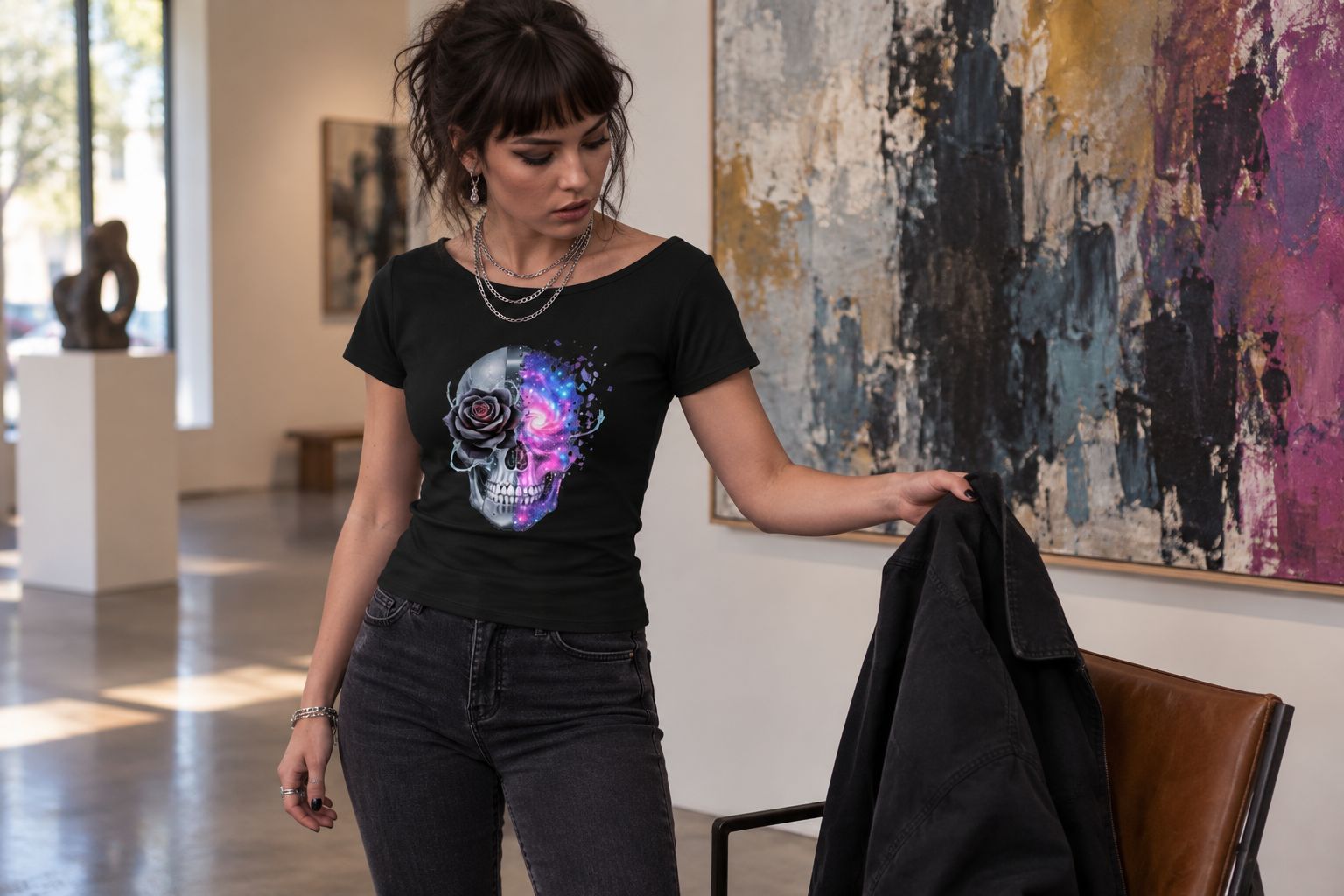
Use clothes you already own to try a silhouette before committing to it. An off-the-shoulder neckline creates a different outfit from a standard tee; assess whether you enjoy that shape during the activity you’re dressing for.
Beautiful Mind ADHD - Women’s Off-the-Shoulder T-Shirt offers that neckline for shoppers who want it. Its limitation is equally clear: it is not the same choice as a conventional covered-shoulder tee. Test your preference for shoulder coverage rather than assuming the more expressive cut is automatically better.
For your 2026 exhibition outfit, picture the whole evening: carrying your bag, greeting people, reaching for a coat, and standing beside your work. An outfit should survive those ordinary movements without becoming a project of its own.
- Raise your arms and check how the neckline moves.
- Sit and stand to test the hem position.
- Try the top with your usual underlayer.
- Put on your everyday bag and check the straps.
- Reject a silhouette that needs more adjusting than you want.
Build a repeatable outfit formula
Start by combining your favorite top with bottoms and shoes you already wear. Save a photo of the outfit if that helps you repeat it. Buying guidance becomes clearer when you know which role a new garment needs to fill.
For a graphic-first outfit, let the top carry the statement and keep the other pieces as quiet or loud as you like. For messy studio work, protect the clothing you want to keep clean with appropriate workwear. For an opening, add a layer only after checking that it works with the neckline and graphic.
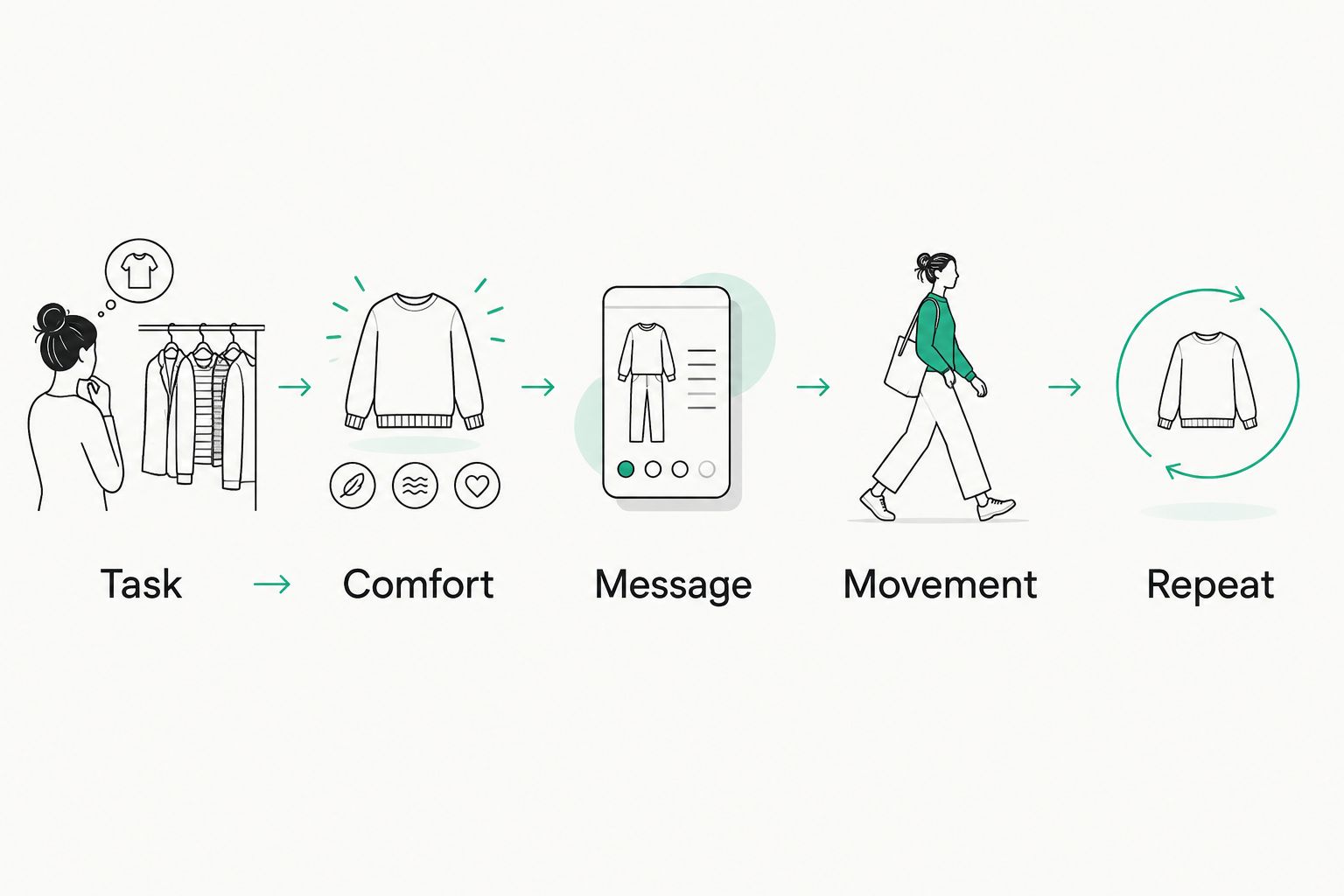
Use this sequence for your 2026 wardrobe: Task, Comfort, Message, Movement, Repeat. It puts the activity before the shopping decision and leaves room for every unique mind to dress differently.
- Build an outfit from pieces you already trust.
- Identify the exact gap a new top would fill.
- Check the outfit with its intended layer.
- Save a reference photo for easy repetition.
- Follow each garment’s own care instructions.
Compare options for your creative wardrobe
Choose by role, not by a universal winner. An identity-forward cotton tee, an off-the-shoulder top, and a fleece layer answer different wardrobe needs. The table separates their strengths from the trade-offs you still need to check.
The named Adhdthreadz products below are options based on their supplied titles and descriptions, not a wear-test ranking. Your existing clothes remain the best reference for personal fit and feel.
| Option | Best for | Useful detail | Key limitation |
|---|---|---|---|
| Your existing favorite tee | Establishing a comfort baseline | You already know its fit and feel | It might not carry the message you want |
| Too Much Not Enough ADHD Unisex Cotton T-Shirt | Creatives who want a direct identity statement | Cotton tee with an explicit message | The wording is prominent; choose it only if it feels right to you |
| Beautiful Mind ADHD - Women’s Off-the-Shoulder T-Shirt | Exhibition outfits built around an expressive neckline | Off-the-shoulder shape | Not the choice for someone seeking conventional shoulder coverage |
| ADHD What it's Like - Unisex Seamless Cotton T-Shirt | Shoppers prioritizing stated construction details | Described as seamless, drop-shoulder, 200 GSM cotton | Fabric weight alone does not establish personal comfort |
| What It's Like Fleece Hoodie – ADHD Streetwear | ADHDThreadz | A thicker fleece layer in a creative wardrobe | Described as 350gsm thick fleece | Not interchangeable with a lightweight tee |
| Dedicated workwear | Messy making sessions | Keeps favorite outfits out of the mess | Does not replace required protective equipment |
If the statement tee or off-the-shoulder shape matches your brief, these are the relevant pieces to inspect next. Check the garment details against your comfort baseline before deciding.


Common mistakes artists and creatives make
Buying the graphic and ignoring the garment
A statement you love cannot answer questions about the neck opening, inside seams, or sleeve movement. Check those details separately. Buy the garment and the message together, not one at the expense of the other.
Treating exhibition clothes as studio workwear
If you want a tee clean for an opening, don’t make it your default paint shirt. Separate those roles deliberately. That is a wardrobe decision, not a reason to stop wearing clothes you enjoy.
Copying a silhouette that fights your workflow
An off-the-shoulder top can suit an exhibition outfit without being your preferred drawing shirt. A roomy layer can look right and still conflict with workshop rules. Dress for the task before copying a styled photo.
Expecting clothing to change creative performance
ADHD apparel expresses identity; it does not establish better concentration, creativity, or productivity. Choose clothing because you like wearing it. Your art does not need a performance promise attached to a tee.
Letting a slogan speak louder than you want
An explicit graphic invites visibility, but you control when you want that visibility. Keep a quieter option if it suits client meetings or particular events. Community pride does not require wearing the same message everywhere.
FAQ
What is ADHD apparel for artists and creatives?
ADHD apparel for artists and creatives is everyday clothing that combines neurodivergent self-expression with personal comfort preferences. Choose the fit, fabric, and graphic around your actual creative activities.
What's the best ADHD apparel for an art studio?
The best studio option is clothing that fits your movements and follows your workspace’s clothing requirements. Keep garments you want clean separate from messy making clothes, and use required protective equipment.
Is Adhdthreadz a good fit for creative people?
Adhdthreadz is a fit for creative people seeking everyday graphic apparel designed around ADHD and unique minds. Check each garment’s construction and silhouette separately because a shared identity theme does not mean identical fit or feel.
Does an ADHD graphic tee automatically mean sensory-friendly construction?
No, an ADHD graphic does not establish sensory-friendly construction. Look for explicit material and construction details, then compare them with clothing you already enjoy wearing.
Is cotton better than fleece for creative work?
Neither cotton nor fleece is universally better for creative work. Compare the specific garments, your workspace, the layering role, and your own texture preferences rather than choosing by material name alone.
Can I wear an off-the-shoulder ADHD tee to an exhibition?
Yes, an off-the-shoulder ADHD tee works as an exhibition outfit when you enjoy that neckline and it suits the event. Test it with your bag, underlayer, and jacket before deciding on the complete outfit.
Does ADHD clothing improve focus or creativity?
ADHD clothing is apparel, not a method for improving focus or creativity. Choose it for personal comfort, style, and the identity you want to express.
How do I choose an ADHD tee as a gift for an artist?
Ask about the artist’s preferred fit and the messages they like wearing before choosing a tee. A graphic about neurodivergence is personal, so don’t assume a slogan matches someone just because you know their interests.
One last thing
Try the outfit in your working posture, not just in the mirror. A standing photo cannot tell you how a neckline feels over a sketchbook or where a hem sits at your desk. Before adding another piece in 2026, wear your closest existing match through the activity it needs to support.
Keep the bold graphic if it feels like you. Change the cut if it doesn’t. Your wardrobe should make room for your creative life—not ask you to perform someone else’s version of it.
0 comments