
Nurses’ ADHD apparel is everyday clothing chosen for sensory comfort and personal expression, with the aim of building a wardrobe that fits your working life and off-duty identity. This 2026 guide to ADHD apparel for nurses separates uniform requirements from streetwear choices, so you can choose what feels right without treating a graphic tee as clinical workwear.
- Adhdthreadz ADHD apparel suits nurses seeking expressive off-duty streetwear, not a replacement for required uniforms.
- Choose ADHD apparel for nurses by workplace rules, personal sensory comfort, fit, and graphic preference.
- Check permitted base layers separately from commute outfits and off-duty graphic tees.
- Buy for the neckline, movement, and care routine you actually want—not an ADHD label alone.
Start with the setting, not the slogan. Adhdthreadz sells ADHD-focused graphic apparel and everyday clothing; your employer determines what belongs on duty.
Why ADHD apparel matters for nurses
A nursing wardrobe has different jobs to do. Your work clothes must meet your workplace’s requirements, while your commute and off-duty clothes can reflect your own style. One shirt does not need to handle every setting.
Adhdthreadz ADHD apparel is best for nurses who want expressive off-duty streetwear, not a replacement for required uniforms. That distinction makes buying simpler: judge identity-focused clothing as clothing, not as equipment or a promise about how your mind will work.
Sensory comfort is personal. A neckline you love can bother someone else, and a loose fit is not automatically better than a close fit. Choose details you can assess—fabric information, measurements, construction, and care instructions—rather than expecting the word ADHD to settle those questions.
For your 2026 wardrobe, the useful starting point is clear: keep work approval, physical comfort, and personal expression as separate decisions. You can care about all three without compromising any of them.
How to choose ADHD apparel for nurses
Separate your work and off-duty outfits
Before shopping, make 2 outfit roles: work-approved clothing and personal clothing. Use a note on your phone or a sheet of paper. Put each potential purchase into a role before deciding whether you like the graphic.
Read your current workplace dress requirements rather than relying on what another nurse wears elsewhere. A tee under scrubs, a visible graphic, and a sweatshirt worn during a commute are different decisions. Ask the person responsible for uniform guidance when a rule is unclear.
This is your first filter for 2026 purchases. An excellent off-duty shirt is still an off-duty shirt; it does not become appropriate for patient-facing work because its message matters to you.
- Work-approved clothing: check the rules for visible layers, sleeves, colors, and graphics.
- Commute clothing: plan what comes off or changes before work begins.
- Off-duty clothing: choose the silhouette and message you actually want to wear.
- Gift purchases: ask whether the recipient wants workwear, casualwear, or both.
Identify the clothing details you notice most
Start with a shirt you already enjoy wearing. Look at its collar, sleeves, hem, fabric, and inside construction. Your own wardrobe gives you a useful reference without buying anything new.
Write down what you like in plain language: a collar that stays away from your neck, room across your shoulders, or a hem that stays where you want it. Avoid turning those preferences into universal rules for every unique mind. Your comfort belongs to you.
At this stage, compare product details against your reference shirt. Adhdthreadz offers identity-focused clothing, but the ADHD theme alone does not establish whether an individual garment matches your sensory preferences. Buy the construction you want, not just the category name.
- Neckline: note the opening and where it touches your skin.
- Inside finish: inspect seams, labels, and the reverse side of decoration when possible.
- Fabric feel: distinguish the texture you enjoy from a broad word such as soft.
- Sleeve shape: check whether you prefer fitted, regular, or roomy sleeves.
- Hem position: decide whether you want cropped, hip-length, or longer coverage.
Check the fit through real movements
Use your favorite shirt as a measurement reference before ordering. Compare its dimensions with the garment’s published measurements, rather than assuming the same size label means the same fit across different cuts.
Then use 3 fit checks when you try clothing on: reach, sit, and layer. Reach forward and overhead. Sit in the bottoms you plan to wear. Add the jacket or other layer that belongs in that outfit.
A mirror shows the silhouette; movement shows whether you keep adjusting it. An off-the-shoulder cut is a deliberate style choice, so assess whether you enjoy that neckline rather than expecting it to behave like a crewneck. Check the retailer’s return conditions before using a try-on as a buying strategy.
- Reach: notice pulling across the shoulders and movement at the hem.
- Sit: check the waistband overlap and how the shirt settles.
- Layer: assess bulk, collar interaction, and sleeve bunching.
- Compare: use garment measurements where supplied, not only size names.
- Decide: reject a fit that needs repeated adjustment to feel right.
Match the fabric and layer to the outfit
Check the full material and care information for each garment. Do not assume every tee from one store has the same composition, thickness, or inside finish. A cotton title tells you something useful, but it does not describe every construction detail.
For example, the supplied description of What It's Like Fleece Hoodie – ADHD Streetwear | ADHDThreadz identifies 350gsm fabric. That is a fabric-weight detail, not proof of your ideal temperature or sensory experience. Best for: shoppers comparing a substantial hoodie with lighter outfit options. Limitation: fabric weight alone cannot tell you whether the finished garment feels right on your body.
For nurses, assign an outer layer to its actual use: commute, casual plans, or home. If you want a base layer for work, return to workplace approval before comparing fabrics. A streetwear hoodie and a permitted under-scrub tee do not serve the same role.
- Composition: read the stated fibers for the individual garment.
- Weight: use published fabric weight as one comparison point, not a comfort guarantee.
- Layering: consider the complete outfit rather than the shirt alone.
- Care: check whether the instructions fit your actual laundry routine.
Choose the message you want to wear
Read the full graphic before buying. Choose language you enjoy wearing in public, not a phrase that happens to be popular or that someone else thinks describes you.
Your ADHD identity is yours to express—or not express. You do not owe coworkers, strangers, or patients a conversation about a shirt. A bold statement belongs in your wardrobe only if you want that statement on your body.
For a gift, ask about the recipient’s preferred wording and silhouette first. A slogan that feels affirming to one person can feel uncomfortable to another. The same applies to off-the-shoulder styling, cropped lengths, and oversized layers: preference beats surprise when fit and identity are involved.
- Read the wording: choose a message you genuinely agree with.
- Consider visibility: decide how openly you want to express your identity.
- Match your style: choose the graphic and silhouette together.
- Ask before gifting: confirm wording, cut, and size preferences.
Build a repeatable clothing rotation
Lay out the pieces you already own before adding new ones. Put the proposed tee beside actual bottoms, shoes, and outerwear. This free check tells you whether you are buying a usable outfit component or just an appealing product image.
Save 1 complete outfit you would happily wear again. A phone photo or written list is enough. You do not need a new wardrobe system, matching set, or special accessory to make a graphic tee work.
For your 2026 rotation, prioritize the role you are missing. If work clothing is covered, choose an off-duty piece on its own merits. If you need a permitted base layer, an expressive casual top does not fill that gap merely because both are shirts.
- Check the role: identify the outfit need before choosing a product.
- Use existing pieces: pair the new garment with clothing you already like.
- Save the outfit: record a complete combination rather than an isolated tee.
- Check the routine: include care requirements in your purchase decision.
- Stop at enough: add clothing for a clear use, not to complete a theme.
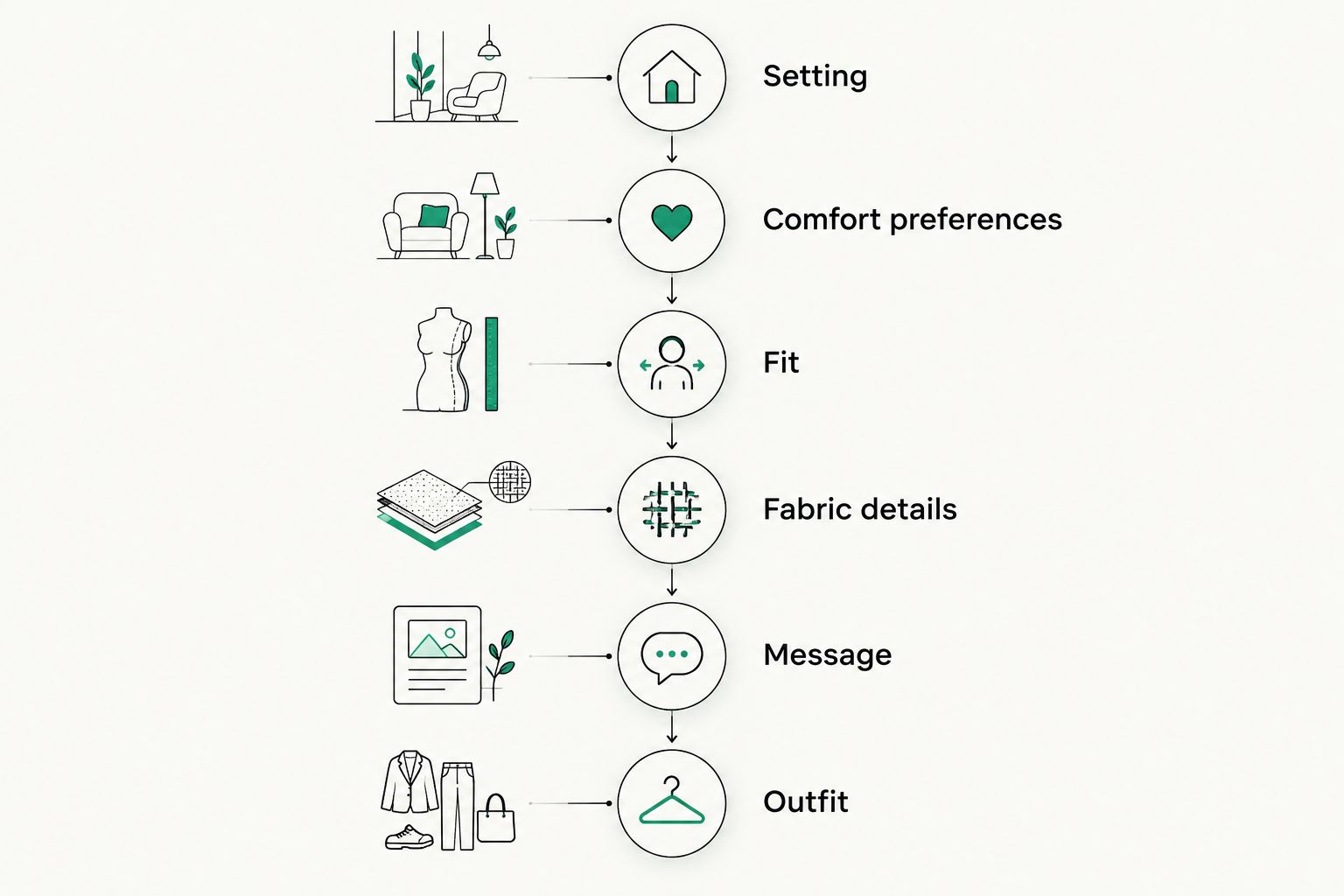
These checks work in order: establish the setting, identify your comfort preferences, assess the fit, read the fabric details, choose the message, and build the outfit. Keep that sequence when a strong graphic tempts you to skip the practical questions.
Compare clothing options for your nursing wardrobe
The right comparison is not simply graphic tee versus graphic tee. Compare each option by where you will wear it, what it offers, and what still needs checking. For a 2026 purchase, workplace permission and personal fit remain more useful than a broad claim that something is nurse-friendly.
| Option | Best for | Useful feature or role | Key limitation |
|---|---|---|---|
| Required work uniform | Meeting your employer’s clothing requirements | Gives work clothing a clearly defined role | Does not necessarily provide your preferred off-duty style |
| Employer-permitted plain base layer | Nurses who want a layer beneath their uniform | Keeps the choice focused on fit, material, and permitted use | Requires workplace approval; personal comfort still needs checking |
| Too Much Not Enough ADHD Unisex Cotton T-Shirt | Nurses seeking an expressive off-duty cotton tee | Combines a unisex cotton T-shirt with an identity-focused statement | The cotton title does not establish label construction, fit, or workplace permission |
| Beautiful Mind ADHD - Women’s Off-the-Shoulder T-Shirt | Nurses who want an off-the-shoulder casual silhouette | Offers a distinct neckline alongside an ADHD-focused message | The neckline needs its own fit check; do not assume work suitability |
| Existing favorite casual tee | Nurses who already own a shirt that feels right | Provides a reference for measurements, texture, and outfit combinations | Does not add a new silhouette or statement to the wardrobe |
Choose the cotton tee for its statement and garment type; choose the off-the-shoulder tee for its neckline and message. Neither choice replaces checking measurements, care instructions, or your employer’s requirements.
The existing-shirt option deserves a place here. If it already does the job, keeping it is a valid decision. A new piece earns its place by adding something you actually want, whether that is wording, shape, or a different outfit role.
Shortlist expressive off-duty tees
These Adhdthreadz options belong on an off-duty shortlist, not an approved-uniform list. The first emphasizes a statement on a unisex cotton T-shirt; the second combines an affirming message with an off-the-shoulder cut. Choose between them by the garment you want to wear, not by assuming one fits every nurse.


Common mistakes nurses make when buying ADHD apparel
Treating identity apparel as approved workwear
A product’s ADHD wording does not establish where you can wear it at work. Check your own workplace requirements before assigning any graphic tee, neckline, or outer layer to a shift outfit. Keep an appealing off-duty purchase separate from a uniform decision.
Buying for a slogan while ignoring the cut
The message can be perfect while the neckline is wrong for you. Read the garment description with the graphic temporarily out of the decision. If you would dislike that shape without the print, the print does not solve the fit issue.
Assuming sensory comfort is identical for everyone
Avoid buying on the assumption that nurses with ADHD all want the same fabric or silhouette. Use your own preferences and a familiar garment as the reference. For gifts, let the recipient define what comfortable means.
Choosing an outfit for the product photo, not your life
A top styled for a photo still needs to work with your own wardrobe. Check whether you like it with your usual bottoms and outerwear. If the outfit requires replacing several pieces you already enjoy, reconsider the purchase rather than forcing the look.
FAQ
What's the best ADHD apparel for nurses?
The best ADHD apparel for nurses matches the intended setting, personal comfort preferences, and desired style. Use workplace-approved clothing for duty and assess expressive graphic apparel separately for off-duty wear.
Can I wear an ADHD graphic tee under my scrubs?
Your workplace’s dress requirements determine whether an ADHD graphic tee is permitted under scrubs. Check the rules for base layers, sleeves, colors, and visible graphics before choosing a shirt for work.
Is ADHD apparel the same as nursing workwear?
ADHD apparel is not automatically nursing workwear. Identity-focused everyday clothing and graphic tees do not establish compliance with an employer’s uniform requirements.
Is cotton always the most comfortable choice?
Cotton alone does not establish whether a garment will feel comfortable to you. Assess the individual shirt’s texture, fit, neckline, inside construction, and care requirements against your own preferences.
Is an off-the-shoulder ADHD tee a good choice for nurses?
An off-the-shoulder ADHD tee is a casual option for nurses who enjoy that neckline. Check how it sits during movement and do not assume the cut is suitable for work.
What should I check before buying ADHD apparel as a gift for a nurse?
Check the recipient’s preferred wording, silhouette, measurements, and intended use before buying. An identity-focused graphic is a personal choice, so ask rather than assuming the message will suit them.
Does ADHD apparel improve focus or treat ADHD?
ADHD apparel is clothing, not a treatment or a promise of improved focus. Choose it for personal comfort, style, and expression without expecting a medical benefit.
One last thing
Before your next 2026 clothing purchase, hide the graphic in the product photo and assess the garment underneath. Would you still want the neckline, sleeves, and hem? If the answer is no, choose another cut.
Then bring the message back into the decision. That is where Adhdthreadz belongs: helping you express your identity through clothing you actually want to wear, without making your nursing uniform carry every part of your personal style.
0 comments