
Instead of rebuilding an outfit from a crowded closet every morning, build an ADHD capsule wardrobe around clothes you actually wear, complete outfits, and a repeatable laundry reset. This 2026 workflow takes you from closet basics to a working rotation without making your streetwear quieter or your personality smaller.
- Build an ADHD capsule wardrobe around sensory comfort, complete outfits, and your actual laundry routine—not a fixed item count.
- Adhdthreadz suits neurodivergent shoppers who want graphic apparel and identity-forward everyday clothing.
- Keep statement tees in your capsule; repeat the supporting pieces instead of deleting your style.
- Test outfits before adding clothes, then update the rotation when weather or daily needs change.
Why this matters
A capsule wardrobe is a selected group of clothes you can combine into outfits for your actual life. It does not require beige everything, identical hangers, or throwing away the rest of your closet.
Adhdthreadz is best for neurodivergent shoppers who want graphic apparel that puts identity into everyday outfits. Start with the Adhdthreadz approach to self-expression, but judge every garment by your own fit and sensory comfort preferences.
Your 2026 capsule needs to work when your favorite tee is in the laundry, not just when everything is freshly folded. The goal is a usable rotation with room for every unique mind—not a collection that only works in a photograph.
Before you start
- Gather your real wardrobe. Include clean clothes, laundry, shoes, and layers you regularly reach for. Keep a mirror and somewhere to record outfit combinations nearby; no account or app is required.
- Choose a contained starting point. Use one rail, drawer, or section of your closet. Try a 10-minute first pass if emptying everything would leave you with an unfinished floor pile; that is a suggested boundary, not a deadline.
- Check the laundry gap first. A capsule that assumes daily washing will not match a weekly wash routine. Include enough wearable alternatives for your actual interval, and check each garment’s care instructions before grouping loads.
For this 2026 setup, use paper labels if they make the process clearer. The bold labels below are labels you create, not settings in an app.
Closet audit
- Start with what you wore. Pull out clothes you have recently chosen willingly. Do not begin with what you think a capsule wardrobe should contain.
- Create three groups: Wear now, Check fit, and Outside rotation. Put dependable pieces in the first group. Put unresolved fit or feel questions in the second. Put occasion-specific, seasonal, or currently unwanted pieces in the third.
- Try on the uncertain pieces. Sit, reach, walk, and put on your usual outer layer. Notice the neckline, waistband, sleeves, labels, and how the fabric feels against your skin.
- Record the reason for each rejection. Write something specific, such as collar contact, sleeve restriction, or no matching bottom. Different problems need different fixes.
- Keep disposal separate. Store clothes outside the active rotation before deciding whether to donate, repair, alter, or keep them for another season.
Expected result: Your active group contains clothes you want to wear now, while unresolved pieces have a separate place and a clear reason for being there.
Do not promote an uncomfortable garment because its color matches everything. That solves a coordination problem while leaving the reason you avoid wearing it untouched.
Equally, do not reject a loud graphic because someone else’s capsule looks minimal. A familiar silhouette with a bold print still has a place in a repeatable wardrobe.
Outfit map
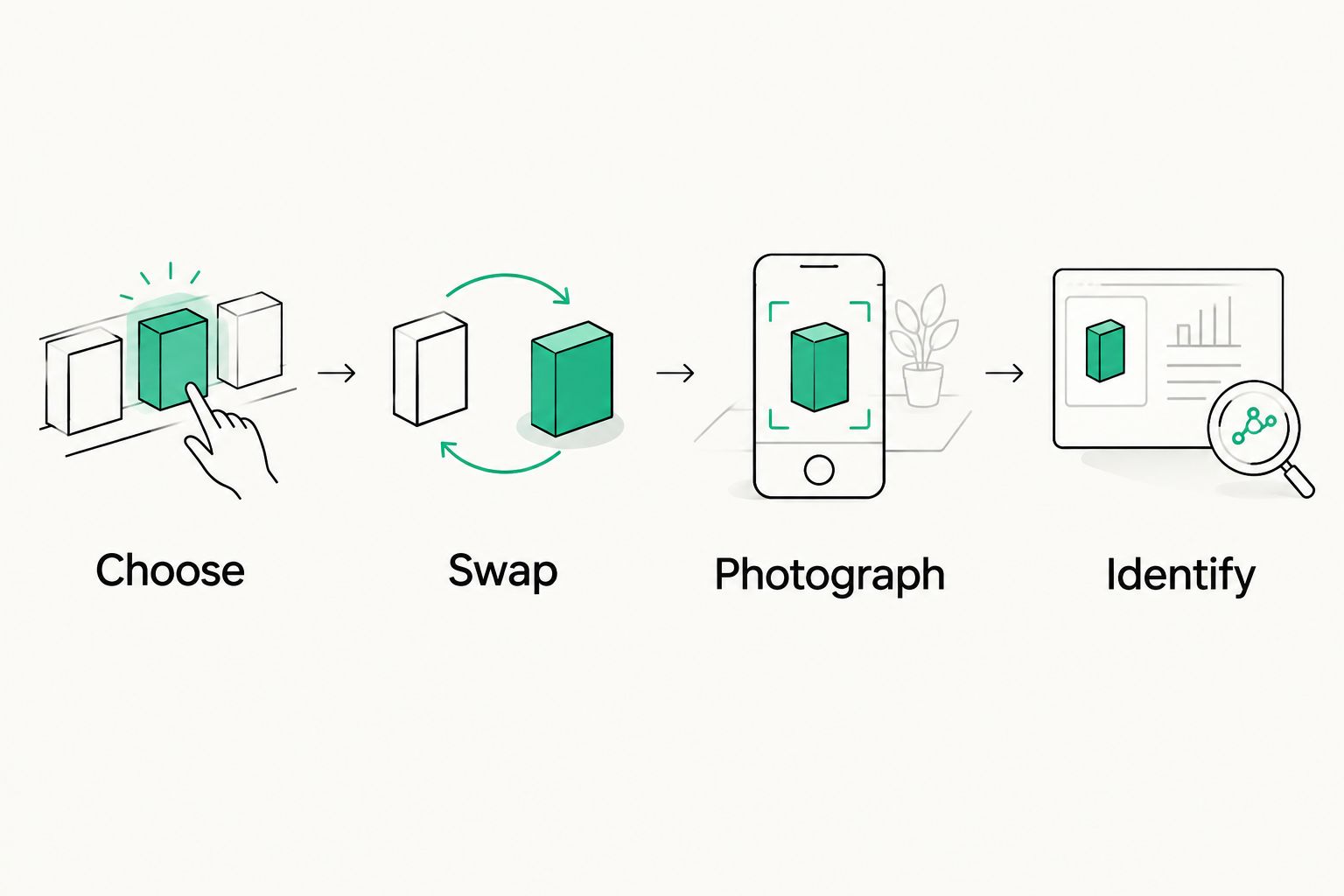
- Choose a starting outfit. Put together a top, bottom, shoes, and any layer you need for an ordinary day. Use clothes from your Wear now group.
- Change one piece at a time. Swap the top while keeping the bottom and shoes. Then test a different bottom with the original top. Keep only combinations you would actually leave home wearing.
- Photograph complete looks. Include footwear and layers. A top-and-bottom combination is not finished if the only shoes that suit it are uncomfortable for the day ahead.
- Name outfits by use. Create labels such as Workday, Off duty, and Evening. Use your own routines rather than categories you rarely need.
- Identify the missing role. Write the job of a missing piece before considering a purchase: an everyday top, a warmer layer, or a bottom that works with existing graphics.
Expected result: You have a small outfit library and a specific list of gaps, rather than a vague instruction to buy more basics.
For a starter exercise, photograph 3 complete outfits. That is a suggested test size, not a rule about how many outfits you need. If those looks all depend on the same bottom, test an alternative before calling the rotation finished.
Graphic tops with different roles
Adhdthreadz graphic apparel can supply the statement piece while clothes you already own supply the supporting cast. These two options fill different styling roles; neither replaces your own fit check.
| Option | Best for | What earns its place | Limitation to check |
|---|---|---|---|
| Too Much Not Enough ADHD Unisex Cotton T-Shirt | A statement tee at the center of everyday outfits | Cotton T-shirt format with an ADHD identity message | The message is prominent; choose it because you want to wear that statement |
| Beautiful Mind ADHD - Women’s Off-the-Shoulder T-Shirt | An off-the-shoulder alternative within your rotation | A different neckline without abandoning a graphic-tee approach | The neckline does not offer conventional shoulder coverage; test it with your usual layers |
Choose the Too Much Not Enough ADHD Unisex Cotton T-Shirt for a statement-led everyday role. Choose the Beautiful Mind ADHD - Women’s Off-the-Shoulder T-Shirt when the neckline is part of the outfit you want. Neither choice establishes how the garment will feel on your body.
Before adding either, name the bottom and shoes you would wear with it. If the answer requires several other purchases, it is not filling a simple gap in your current capsule.


Physical closet setup
- Give the active rotation a boundary. Assign a reachable section to the clothes in your outfit map. Leave seasonal storage and unresolved fit checks outside that section.
- Arrange clothes by outfit role. Put tops together, bottoms together, and layers together. If complete-outfit grouping makes more sense to you, use that instead; do not maintain both systems unless both help.
- Keep the outfit reference nearby. Store photos in one album or keep a written outfit list near the closet. Use the same names you created during outfit mapping.
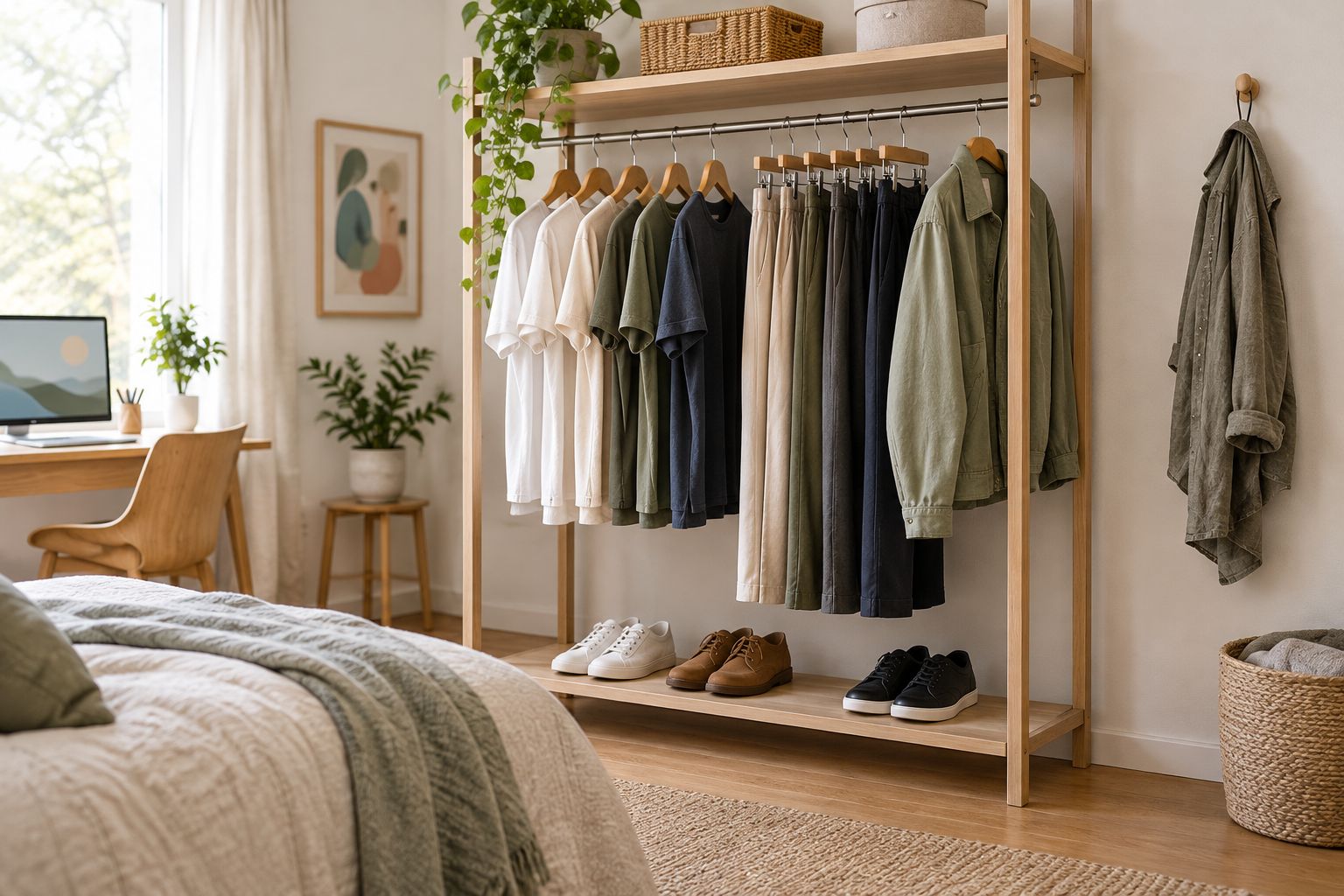
- Create a Rewear location. Give clothes you intend to wear again before washing a defined hook, hanger, or shelf. Keep that space distinct from clean storage and the laundry basket.
- Make footwear part of the setup. Put your regular shoes where you can retrieve them without unpacking unrelated pairs.
Expected result: You can locate a complete outfit, its shoes, and an appropriate layer without searching outside the active rotation.
Do a physical check rather than admiring the arrangement. Retrieve an outfit, then put it back. If doing either requires moving several unrelated stacks, change the layout now.
Laundry reset
- Choose a realistic reset cue. Attach the closet check to something you already do, such as putting away a completed wash. Avoid creating a schedule that depends on a routine you do not have.
- Restore outfits, not just piles. Return clothes to their assigned places, then check which photographed outfits are ready to wear.
- Note repeated shortages. If the same garment repeatedly leaves every preferred outfit incomplete, record its role. Check unused alternatives before adding another garment.
- Separate care tasks. Put items needing repair or special attention outside the ready-to-wear group. Follow each item’s care label rather than assuming every tee takes the same wash.
- Review after a real wear cycle. Try the setup across a 7-day interval if that matches your week. Use the review to change the wardrobe, not to grade yourself.
Expected result: Your rotation returns to a usable state, and recurring gaps become specific decisions rather than repeated surprises.
Track what happened in plain language: wore it, skipped it, needed washing, or did not suit the day. You do not need a spreadsheet to notice that a supposedly versatile layer never leaves its hanger.
Update the capsule when the weather changes
Use the same workflow for a seasonal refresh instead of rebuilding your wardrobe from scratch. For a warm-weather change in 2026, start with the outfits you already wear and identify exactly which component no longer suits the conditions.
- Keep the working base. Retain combinations that still match your plans and comfort preferences.
- Change the affected role. Test a different top or layer rather than replacing an entire outfit automatically.
- Repeat the movement check. A neckline or sleeve that works alone still needs checking under a jacket.
- Update the photo. Replace the old outfit reference so it shows the combination currently in your closet.
Best for seasonal updates: Change the smallest part that solves the actual problem. The advantage is continuity; the limitation is that a major change in your work, climate, or daily activities requires a broader review.
Keep out-of-season pieces separate but identifiable. Storage should not become a place where unresolved decisions disappear indefinitely.
Troubleshooting
Every outfit depends on one favorite piece
Build a complete outfit without that garment. If the alternative fails, identify whether fit, color, coverage, or footwear causes the problem before adding another piece.
A duplicate is useful only if you genuinely want the same role repeated. It does not solve a mismatch elsewhere in the outfit.
The clothes coordinate, but you keep avoiding them
Repeat the try-on check during normal movement. Separate appearance from feel: an outfit can look right while its neckline, waistband, or fabric makes it the wrong choice for you.
Move the rejected piece out of the active rotation. Do not keep assigning it to tomorrow.
The capsule feels too plain
Keep the dependable outfit structure and change the focal piece. A graphic tee, a preferred color, or a different silhouette can carry your style without requiring every garment to make a statement.
Repeat what works; keep the parts that feel like you. Minimal variety is an option, not an entry requirement.
Clean laundry never becomes wearable outfits
Check the put-away step. If storage requires elaborate folding or packed drawers, simplify the arrangement and keep frequently worn pieces accessible.
Also check whether washed clothes still need another task before wearing. A garment waiting for attention is not ready just because it is clean.
Customize your workflow
Build your 2026 wardrobe around the situations you actually repeat. If your week includes a dress code, create a separate outfit group for it rather than expecting every streetwear piece to do every job.
Adhdthreadz belongs in the statement-apparel part of that plan, not as a reason to replace clothes you already love. Add clothing when it fills an identified role and passes your personal comfort check.
For travel, copy complete outfits from your existing map instead of inventing a new wardrobe while packing. For a change in daily routine, rerun the audit on the affected category first.
Keep the system small enough to maintain. A written list that you use beats a detailed wardrobe catalog that you avoid updating.
FAQ
What is an ADHD capsule wardrobe?
An ADHD capsule wardrobe is a selected rotation of clothes organized around your preferences, daily activities, and complete outfits. It is a wardrobe approach, not a clinical tool or a requirement to dress a particular way.
How many clothes should an ADHD capsule wardrobe have?
Use enough clothes to cover your real activities and laundry interval; this workflow does not require a fixed total. Start with working outfits and add pieces only when you identify a gap.
Can I keep graphic tees in a capsule wardrobe?
Yes, graphic tees can be the focal pieces in a capsule wardrobe. Repeat compatible bottoms, shoes, and layers so the graphics do not require a separate set of supporting clothes.
Do I have to get rid of clothes outside my capsule?
No, clothes outside your active capsule can stay in separate storage. Keep seasonal pieces and unresolved fit checks apart from ready-to-wear outfits before making disposal decisions.
How do I choose clothes for sensory comfort?
Check each garment against your own preferences while sitting, walking, reaching, and layering. Pay attention to fabric feel, neckline contact, labels, sleeves, and waistbands rather than assuming a product description guarantees comfort.
Is a neutral capsule better than a colorful capsule?
Neither is automatically better; use the colors and graphics you actually want to wear. Test complete combinations so your preferred palette works with your existing clothes.
What should I buy first for a capsule wardrobe?
Buy for an identified missing role, not from a generic essentials list. Build outfits from clothes you own first, then name the specific gap that prevents a combination from working.
One last thing
Do the missing-favorite test before calling your 2026 capsule finished. Remove the garment you reach for most, then choose an outfit from what remains.
That exercise shows whether you built a rotation or several looks that depend on one piece. Keep the favorite; give it dependable backup. Your wardrobe should leave room for identity, comfort, and an ordinary laundry day at the same time.
0 comments